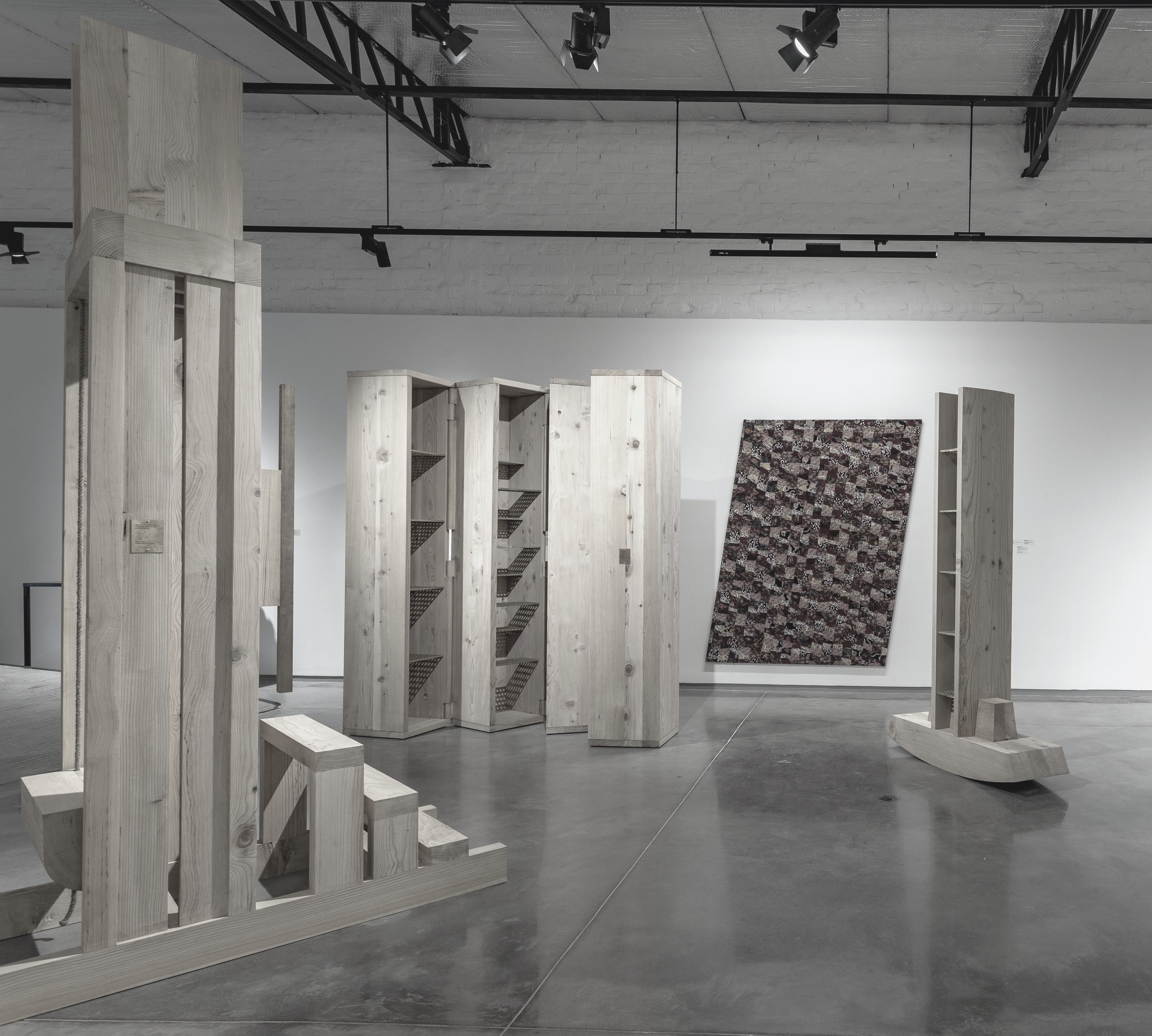
Three objects for three kinds of readers — or perhaps three moments in one reader's life. Each bookcase carries a different proposition: concealment, instability, ascent. Together they form an argument for a slowed-down relationship with books, and with the objects that hold them.
All three are made from a single batch of Cedrus deodara sourced from the Uttarakhand Forest Development Corporation, giving them a shared cellular memory even as each takes a radically different form. The brass is recycled and cast; the finish a vegetable oil-based soap applied by hand.
"There is a secret bond between slowness and memory, between speed and forgetting."Milan Kundera
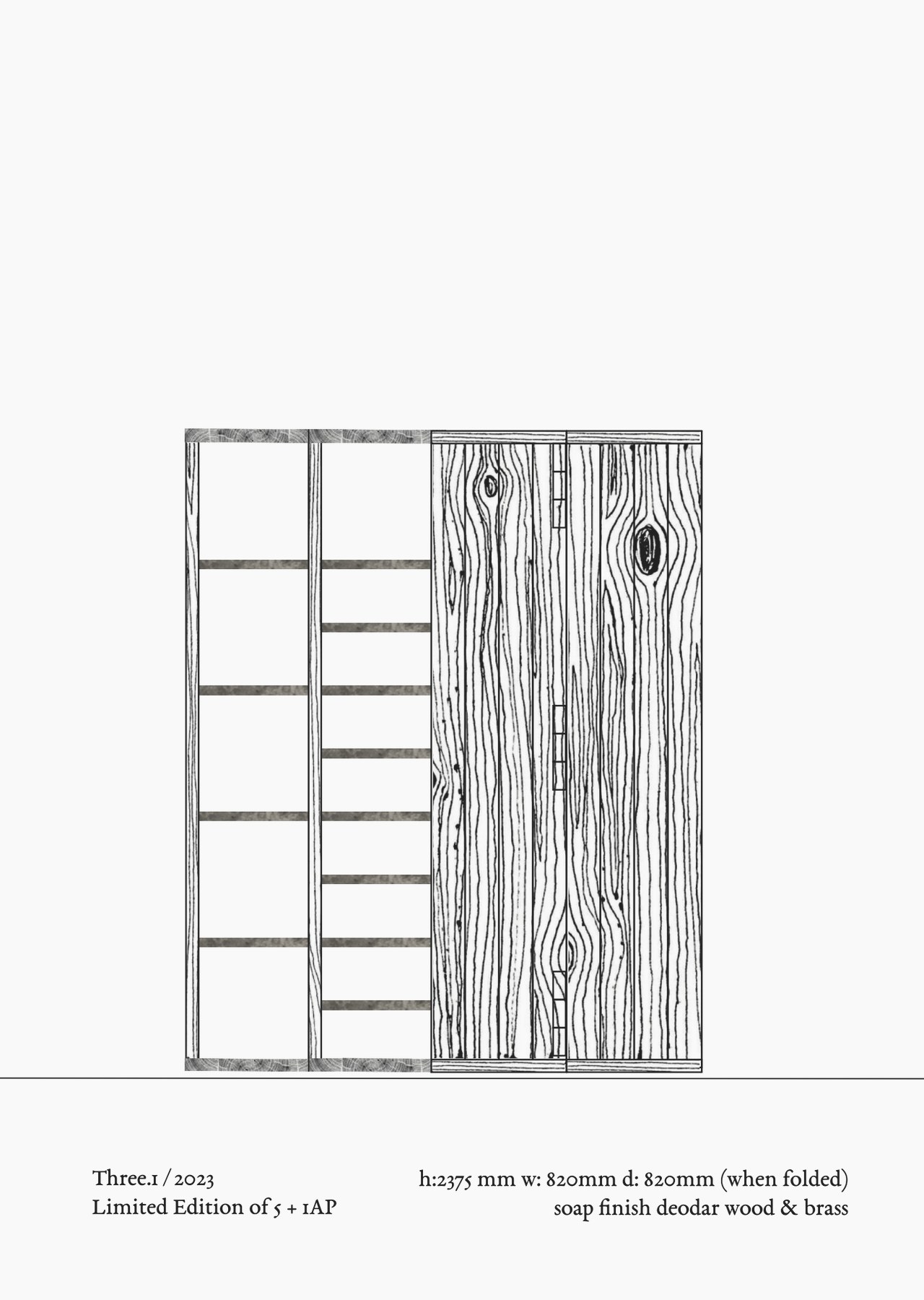
Closed, it presents as an unadorned deodar cuboid — a surface you might walk past. Open, its perforated brass shelves emerge through the hinged facade, the interior gradually revealing itself. The object proposes two states: private and communal, still and animated. What is concealed is also what is most carefully held.
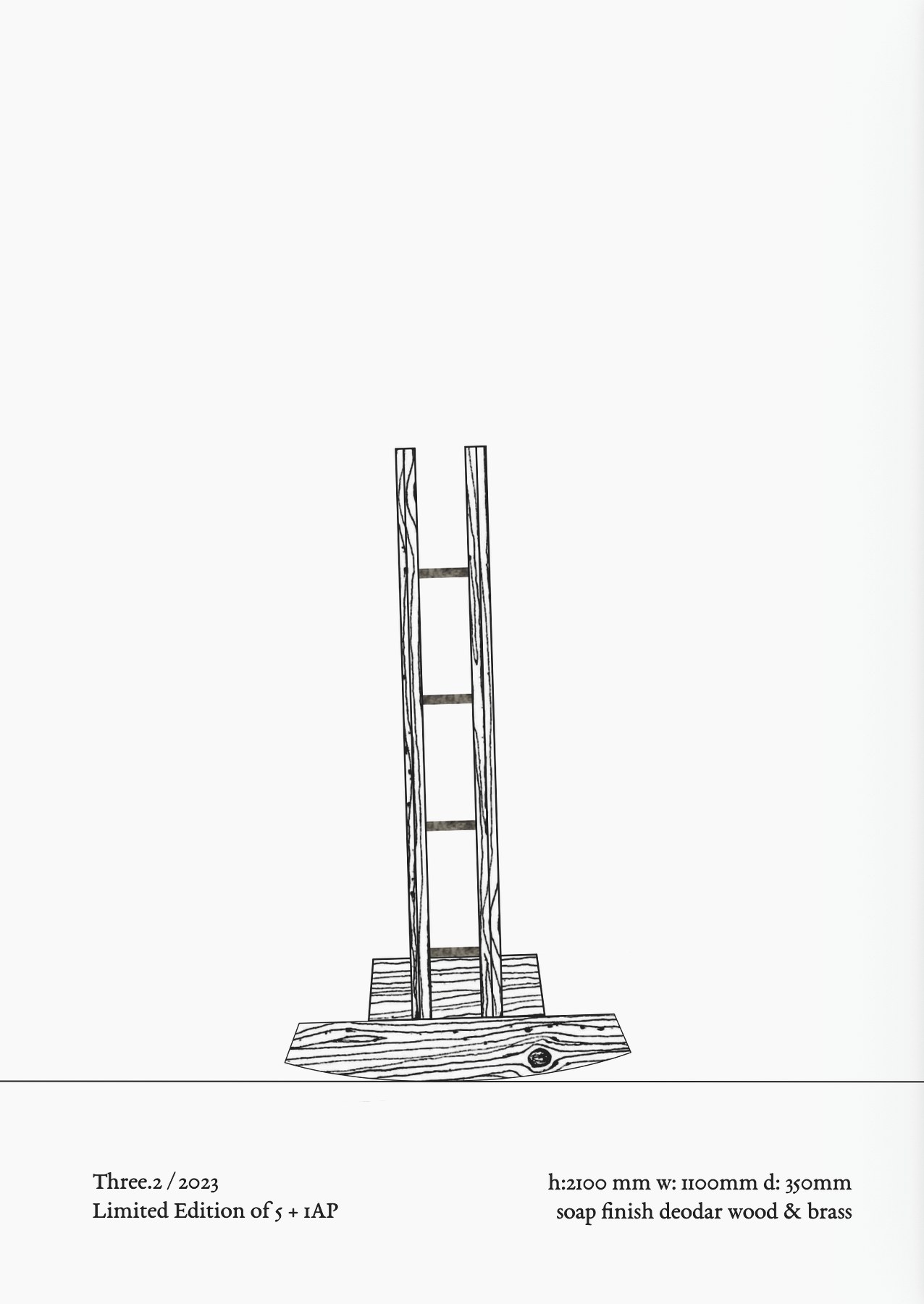
Two deodar columns flank open-faced brass shelves, set on a curved base that allows the piece to sway. The instability is deliberate. As you reach for a book, the object shifts — a quiet reminder that the act of reading is never entirely passive, that attention itself has a centre of gravity.
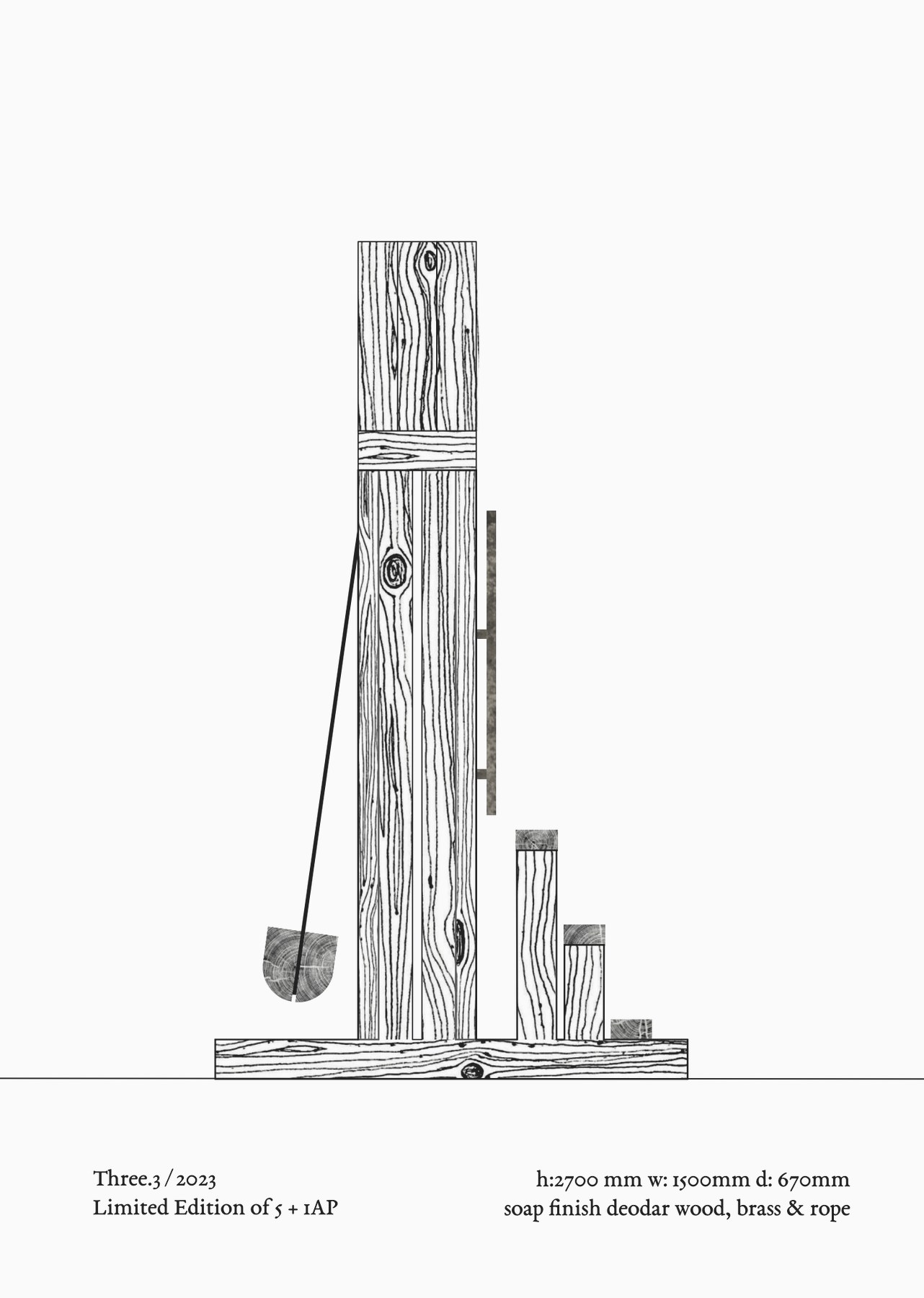
A monumental deodar column. Three ascending steps carved from the same timber. A single shelf — holding a single book — at its summit. A rope swing suspended at shelf height. The piece asks its reader to climb, to sit still, to inhabit the act of reading rather than merely perform it. Slowness as architecture.